Power your home
Enjoy price security with Safe Harbor fixed price energy plans

Enjoy price security with Safe Harbor fixed price energy plans
Consumers are always looking for ways to cut their monthly expenses, but one area they often overlook is how much money they could save on their utilities, especially electric. Your monthly electric bill provides all the detail you need to understand the various costs of supplying electricity, moving electricity from where it’s produced to your home, and maintaining the local lines and equipment that keep your power flowing. With so much detail in your electric bill, it can be hard to know where to focus.
Knowing how to save on your electric bill comes down to understanding two simple numbers: your electricity rate, and your total energy use. Here are the numbers to look for, where to find them, and how you can use them to reduce your usage and potentially save money.
The electricity you use is measured in kilowatt hours. A kilowatt hour represents the amount of energy consumed over a period of time – 1,000 watts over one hour. You may be able to pay less per kilowatt hour by switching from your utility company to another electric supply company currently offering a lower fixed rate, or a competitive long-term fixed rate that avoids seasonal rate hikes that drive up costs as usage increases.
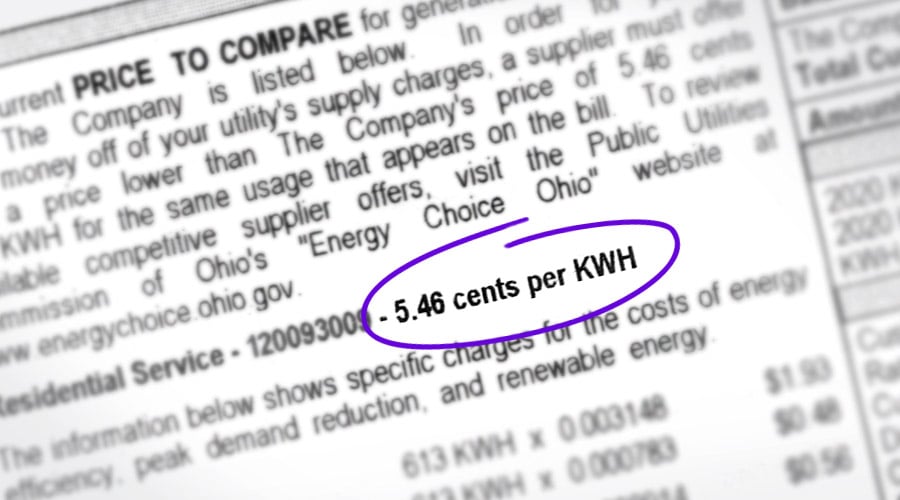
Price to Compare (PTC) is the variable cost per kilowatt hour your local electric utility offers. The PTC can be a monthly, quarterly, or annual price set by your local utility.
The PTC is usually found in the message section of your bill, but may vary based on your utility company. Look for the phrase "Price to Compare" and the supply rate in cents per kWh.
Shop for a lower electricity rate. Energy Choice empowers consumers to compare electricity supply companies just as they would other goods and services. Electricity rates differ by supplier, and by the type of plan you choose. Shop for plans online from companies like Energy Harbor to make sure you are paying a competitive rate for the kind of plan that’s right for your household.
Enter your zip code to see energy plans in your area.
The amount of electricity your household uses varies dramatically based on seasons and the number of people living in your home. For example, costs generally rise during the summer months because you’re running your air conditioning more, and you may have kids home from school who use appliances more frequently.
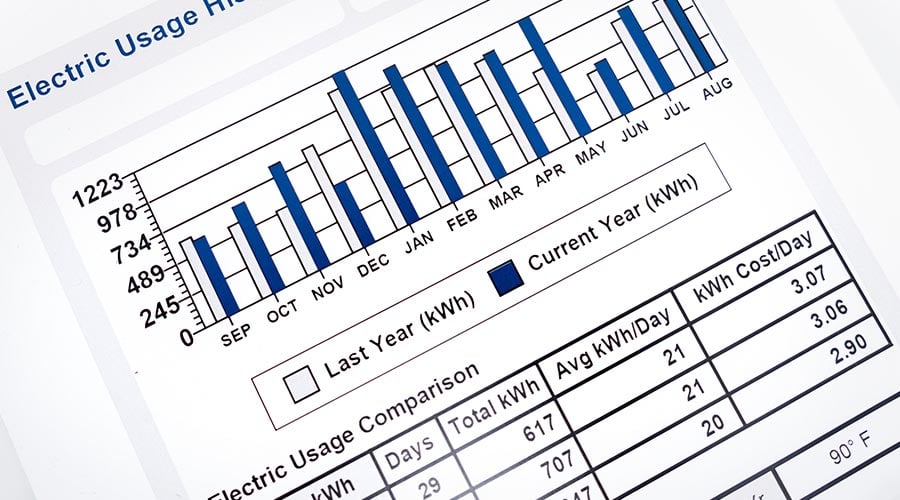
Your bill will show you your current and seasonal total energy usage in total kilowatt hours. Your bill may include other helpful details, such as usage trends, daily average use and monthly average temperature.
The current usage section of your bill shows how much energy your household used between your meter reading from the previous month and the current month. Your bill might also include a helpful graph that shows your previous 12 months’ energy use, broken out by month to show how your energy use changes due to seasonality.
The supply component of your bill represents the total generation and supply costs for the current month. It is calculated by multiplying your cost per kilowatt hour by your total monthly usage. This is the total amount you are able to influence by lowering your cost per unit, your total energy usage, or both.
There are a variety of affordable changes you can make to use less energy, particularly during high-usage months. And, by knowing in greater detail how your home uses electricity, you are able to make better decisions like:
Simple tips on how to save energy