Power your home
Enjoy price security with Safe Harbor fixed price energy plans

Enjoy price security with Safe Harbor fixed price energy plans
As a global society, one of the biggest shared challenges we face is combatting climate change. It’s no longer a future challenge either. We already see changes brought on by carbon emissions and greenhouse gases (GHG), according to NASA climatologists. Changes like shrinking glaciers, shifts in animal migration patterns, and more intense heat waves.
Our best weapon to keep climate change in check – and hopefully reverse some of the damage already done - is lowering our collective carbon footprint by adopting a carbon-neutral lifestyle, both as individuals and as organizations. If we can achieve carbon neutrality, we will not only slow global warming, but we’ll reap the benefits of better air quality, ecological recovery, landscape beautification, and more.
In the simplest terms, carbon neutrality means balancing the amount of carbon dioxide (CO2) and other greenhouse gas emissions produced by an individual or a company with the same amount of GHG emissions reduced or removed from the environment. The goal is to minimize our net contribution to GHGs in the environment as much as possible.
For individuals, achieving carbon neutrality means adopting lifestyle changes such as choosing public transportation when possible to reduce carbon emissions from gasoline-fueled vehicles and recycling and repairing products to reduce GHGs emitted during the production and transportation of those items.
For companies, becoming carbon neutral often involves investing in emission reduction carbon offsetting programs that leverage activities like reforestation, renewable energy adoption, and carbon capture.
The best way to reduce your carbon footprint, whether you’re an average person or a midmarket manufacturer, is to make small but impactful changes every day that help reduce CO2 emissions, minimize waste, and make it a little easier to adopt a more carbon-free lifestyle.
For individuals
Before choosing ways to reduce your carbon footprint, take time to assess your personal environmental impact. Doing so will shine a light on where best to make carbon-free lifestyle choices. One of the easiest ways to do so is by leveraging the Environmental Protection Agency’s free carbon footprint calculator. After answering a few simple questions, the calculator will use U.S. average values to deliver a “quick, rough estimate” of your carbon footprint.
After reviewing your estimate, you can then determine whether your focus should be on making changes around the house, exploring alternative modes of transportation, choosing a clean energy plan, or all three.
Soon you’ll see it’s the accumulation of those smaller decisions that often have the most impact on your effort to reduce your carbon footprint. For example, everything from energy consumption to building materials can contribute to greenhouse gas emissions. But installing proper insulation, purchasing energy-efficient appliances, and investing in renewable and clean energy sources can make a real difference.
When it comes to transportation, nearly a quarter of all global energy-related CO2 emissions can be attributed to the vehicles we drive, the trailers that deliver packages to our homes, and the planes that fly us across the country.
If we want to embrace a sustainable future, we must give careful consideration to how we get from Point A to Point B. For some, that might mean investing in an electric vehicle or choosing public transportation. For others, that could be carpooling more often, riding a bike to work if convenient, or lobbying for a hybrid work environment to reduce the number of commuter days out on the road.
There are even smaller steps we can take, like:
If the world wants to be virtually carbon-free by 2050, as many countries have agreed to do, organizations of all sizes must take responsibility for their carbon footprint and look for ways to decarbonize their operations and supply chain.
One solution is to “trade” carbon emissions production for an equal or greater carbon emissions reduction, ostensibly creating a net carbon emission rate of zero, or net-zero emissions. Businesses large and small can do this by purchasing either carbon offsets or carbon credits.
The unique attributes of nuclear-powered energy allow generators like Energy Harbor to offer U.S.-based businesses and organizations carbon offsets called Emissions-Free Energy Certificates (EFECs) that are affordable, plentiful, and easy to purchase.
Want to learn more about carbon offsets and carbon credits? Check out Which is best for me? Carbon credit vs carbon offset
By investing in reforestation efforts, more sustainable land management, and clean energy adoption, we can better preserve ecosystems, improve air and water quality, and protect biodiversity. Conservation is essential if we want to further combat climate change, explains the United Nation’s Nature for Climate Action organization. We could achieve the equivalent of about one-third of GHG emissions reductions needed in the next decade by simply improving our environment’s ability to absorb emissions.
Among other health benefits, like a reduction in infectious disease transmission, fewer carbon emissions gives us cleaner air to breathe, reducing respiratory illnesses like asthma. Nearly 20,000 childhood asthma cases and 65,000 adverse birth outcomes could be prevented annually by achieving net zero in 16 cities, according to one study.
For organizations, adopting sustainability and carbon neutrality policies demonstrates a commitment to environmental responsibility. This can enhance an organization's reputation, attracting customers, partners, and investors who prioritize sustainability. After all, nearly 88% of consumers consider a company’s sustainability efforts as a factor for doing business.
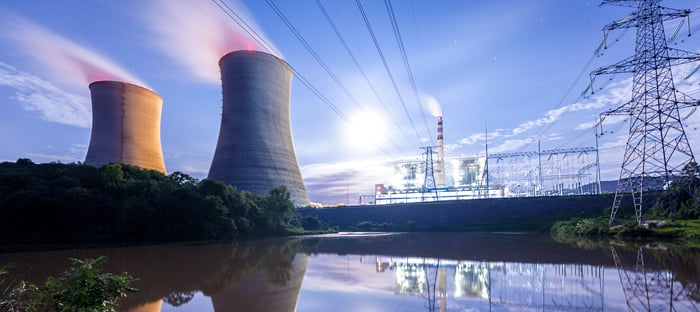
Energy Harbor helps sustainability efforts by providing clean energy via nuclear power to our nation’s power grid. Because generating electricity via nuclear power is a carbon-free, zero-emission product, it is defined as a clean energy resource.
Nuclear power is considered the most reliable energy source because of its “capacity factor,” which measures how often a power plant or energy source is generating electricity compared to its maximum potential. For nuclear power plants, that’s above 92% or double coal’s capacity. It is also four times the capacity of most renewable energy resources. For that reason, nuclear has supplied one-fifth of the U.S.’s power for more than 30 years.
Energy Harbor offers customers a wide selection of affordable carbon-free, clean energy plans that help protect the environment and slow global warming.
Achieving a carbon-free future would deliver significant benefits for individuals, businesses, and our planet.
As global citizens, making sustainable choices daily can have a remarkable impact on climate change efforts. For businesses, carbon neutrality not only enhances the organization’s reputation, it signals to investors that a company is nimble enough to adapt to new challenges and is invested in sustainability efforts.
If you’re ready to learn more about nuclear-powered clean energy or want to add carbon offsets to your net zero strategy, contact Energy Harbor to find a plan that works for you today.
Enter your zip code to see energy plans in your area.