
Loading component...
Loading component...
Loading component...
Testimonials

Enjoy price security with Safe Harbor fixed price energy plans
Testimonials
Enter your zip code to see energy plans in your area.
The transition was quick, easy, and transparent. I’m looking forward to a no-hassle experience.
Signing up on your website was simple and easy to follow. You also sent me a followup confirmation right away. Duke energy followed up the next day with a confirmation as well. Your total process is great.
Energy Choice allows Ohio residents to shop and compare Ohio natural gas and Ohio electricity rates for their homes or business like any other product or service. It’s a freedom Ohioans have enjoyed for more than 20 years after the state passed Senate Bill 3 in 1999, deregulating Ohio’s electricity and natural gas market.
If you’ve recently moved to Ohio from one of the 21 states with a regulated energy market – or one of the 14 states that still regulate either electricity or natural gas – you may be surprised by Ohio’s Energy Choice options.
You might even wonder how you can start shopping and saving. And if you’re an Ohioan who has never compared rates, you might wonder the same thing.
No worries. Comparing is simple and switching is easy.
Here’s all you need to know.
Ohio Energy Choice began with the Energy Policy Act of 1992. The goal of the legislation, signed into law by President George H.W. Bush, was to promote energy efficiency, renewable and sustainable energy, and the development of alternative fuels. Highlights include:
The legislation encouraged competition in the energy sector, as well, and as electricity costs continued to rise in Ohio, the state government made the move to introduce competition in Ohio’s energy market, as well as lower electricity prices.
Senate Bill 3 provided customers across the Buckeye State with the ability to shop and compare rates from competitive retail electric service (CRES) providers and have more control of their energy options.
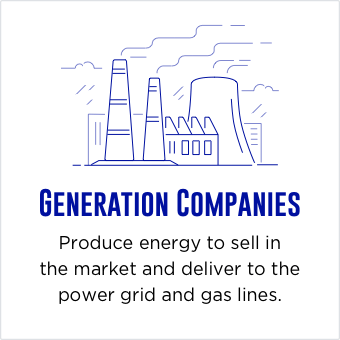
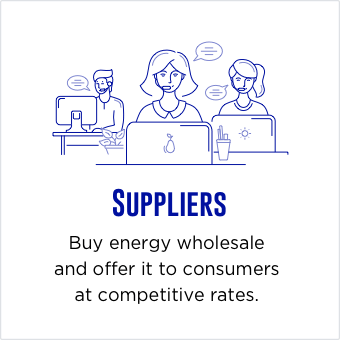
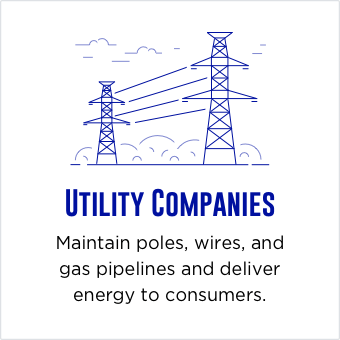
Energy reaches Ohio homes and businesses through the interconnected work of three types of electricity and natural gas companies – generation companies, suppliers, and utility companies.
Securing a competitive rate for electricity is one of the biggest advantages of Energy Choice. Customers can compare Ohio electric suppliers and select the right kind of plan to meet their unique needs.
The Public Utilities Commission of Ohio (PUCO) helps customers through this process by making it easy to compare rates offered by Ohio electric suppliers. In Ohio, all local utility bills include an Apples to Apples Price to Compare (PTC) rate -- the cost per kilowatt hour each local electric utility offers for energy supply. The rate is market-based and typically approved by regulators, and since it is calculated by a 12-month estimate, the Price to Compare rate is subject to change each month.
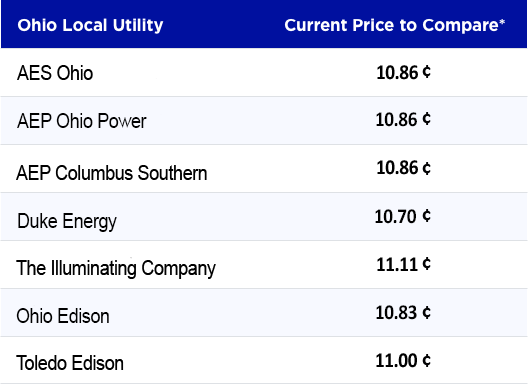
While the Price to Compare is helpful to determine whether an offer from an alternative supplier is competitive, it only addresses the supply portion of your energy bill. The cost associated with other components, such as transmission and distribution service and maintenance, are separate and determined by your utility company.
That’s why residential customers in Ohio pay an average of 16.34 cents per kilowatt hour on their electricity bill, while the Price to Compare might be closer to 4 or 5 cents per kilowatt hour for the electric supply cost.
Six utility companies in Ohio are responsible for distributing and transmitting electricity to the more than 11.5 million people who live and work in the state.
One of Ohio's largest electric utilities, serving over 1.5 million customers with a reliable power supply.
Committed to delivering safe and sustainable energy solutions to Ohio communities.
Provides electric service to customers in southwest Ohio, focusing on reliability and clean energy initiatives.
A subsidiary of FirstEnergy Corp., delivering electricity to customers in northeast Ohio.
A subsidiary of FirstEnergy Corp., supplying electricity to customers in north-central and northeast Ohio.
Part of the FirstEnergy family, providing electricity to customers in the Toledo metropolitan area.
Four utility companies distribute natural gas to customers throughout the Buckeye State.
A utility company providing natural gas services to customers in Ohio and several other states.
A natural gas utility serving customers in Ohio, ensuring the safe and reliable delivery of natural gas.
A diversified energy company, Enbridge Gas (formerly Dominion), providing natural gas services to customers in Ohio, and other energy services to multiple states.
A leading power company serving customers in several states, including Ohio, where it delivers both natural gas and electricity.
If you’re ready to start comparing energy rates – and potentially make a switch – here are six simple steps you can follow to ensure switching success.
Knowing how much you pay monthly for electricity and natural gas – as well as how that price is determined – will help you make a more informed decision when comparing plans.
Most electricity plans come in one of two varieties – fixed rate and variable rate. With a fixed rate, you pay the same rate each billing cycle through the plan contract, regardless of fluctuations in the energy market. The price you pay for electricity could shift significantly from month to month with a variable rate plan, depending on market prices. Beyond rate, the energy provided by clean and green energy plans could save you money over the long term.
Learn more about the pros and cons of fixed-rate and variable-rate plans by reading The Truth About Variable-Rate and Fixed-Rate Plans
Short-term plans typically last 6 to 12 months. Long-term plans can extend beyond 18 months – even up to 36 months. Short-term plans are best if you regularly shop for new rates. Long-term plans lock in a great rate for a bigger stretch of time.
Some energy companies offer incentives to entice you to make the switch – everything from gift cards to energy-efficient smart products that could lower your energy costs. Make sure you don’t miss out on those.
When researching energy suppliers, it's important to choose a plan that matches both your individual values and your budget. Start by knowing how the energy you’re using now is generated. Is it created by a plant that burns fossil fuels? Fossil fuels have an incredibly damaging effect on our climate, as most of us know. If you are environmentally conscious, for example, you may want to consider renewable and clean energy sources or evaluate the environmental impact of each supplier. Read reviews, visit social media, and take the time to learn more about each energy supplier. The right research will reveal the best Ohio energy rates for your needs.
Making the switch to the new provider is simple. In fact, your new supplier will manage the entire process with your utility company.
No matter who your electric supplier is, local utility companies remain responsible for the service and maintenance of the electricity transmission and distribution infrastructure. All outages and downed power lines should be reported to your local utility immediately.
If you plan on moving soon, find out which service areas are covered by your supplier. If they offer plans in your new area, they may be able to help transfer service.
Still have questions about how to switch? Check out How to Choose an Electricity or Natural Gas Plan to learn more.
What to expect when switching to a new electric supply company like Energy Harbor
When it comes to climate change, carbon emissions from fossil fuels are “by far the largest contributor to global climate change, accounting for 75% of global greenhouse gas emissions and nearly 90% of all carbon dioxide emissions,” according to the United Nation’s Climate Action task force.
Because generating electricity via nuclear power is a carbon-free, zero-emission product, it is defined as a clean energy resource. One that is as clean as renewable energy, according to the International Panel on Climate Change. Nuclear power avoids more than 471 million metric tons of carbon dioxide emissions annually, nearly equivalent to removing 100 million passenger cars from the road.
It’s more than that, of course. Nuclear energy produces more electricity on less land – about 50 acres – than any other clean-air source. To produce the same amount of electricity as a 1,000-megawatt nuclear facility, you would need more than 3 million solar panels, says the U.S. Office of Nuclear Energy. You'd need 1,500 acres to build that solar farm.
Nuclear power also produces a fraction of the physical and chemical waste other energy resources do. Electricity generated from a typical 1,000-megawatt nuclear power plant, which would supply the needs of more than 1 million people, produces only three cubic meters of “vitrified high-level waste” per year, according to World Nuclear Association. By comparison, a 1,000-megawatt coal-fired power plant produces about 300,000 tons of ash and more than 6 million tons of carbon dioxide annually, says the organization. In fact, the physical waste produced by nuclear fuel in the U.S. over the last 60 years would fit on about 10 yards of a standard football field. And in the future, much of this waste will be reprocessed and recycled.
Energy Harbor is proud of its ability to offer zero-carbon energy plan options that empower consumers to contribute to a clean energy future.
Energy Harbor is a retail energy supplier, delivering carbon-free and green electricity plans to homes and businesses across multiple States. Our plans provide long-term fixed price protection against fluctuating energy prices.
Energy Harbor provides dependable, affordable, carbon-free electricity to Ohio homes and communities.
Enter your zip code to see energy plans in your area.
Get to know Akron's energy options for a seamless relocation experience.
How to navigate Cleveland's energy plans to enhance your move.
Discover Columbus's energy-saving tips for a cost-effective move.